Beijing — Imperial Capital of China
A city where imperial grandeur meets modern ambition. Beijing has served as China's political and cultural heart for more than eight centuries, leaving behind a skyline stitched with ancient palaces, temple roofs, and soaring glass towers. Whether you are tracing the footsteps of emperors through the Forbidden City or sipping craft cocktails in a restored courtyard, every street tells a layered story.
A city where imperial grandeur meets modern ambition. Beijing has served as China's political and cultural heart for more than eight centuries, leaving behind a skyline stitched with ancient palaces, temple roofs, and soaring glass towers. Whether you are tracing the footsteps of emperors through the Forbidden City or sipping craft cocktails in a restored courtyard, every street tells a layered story.
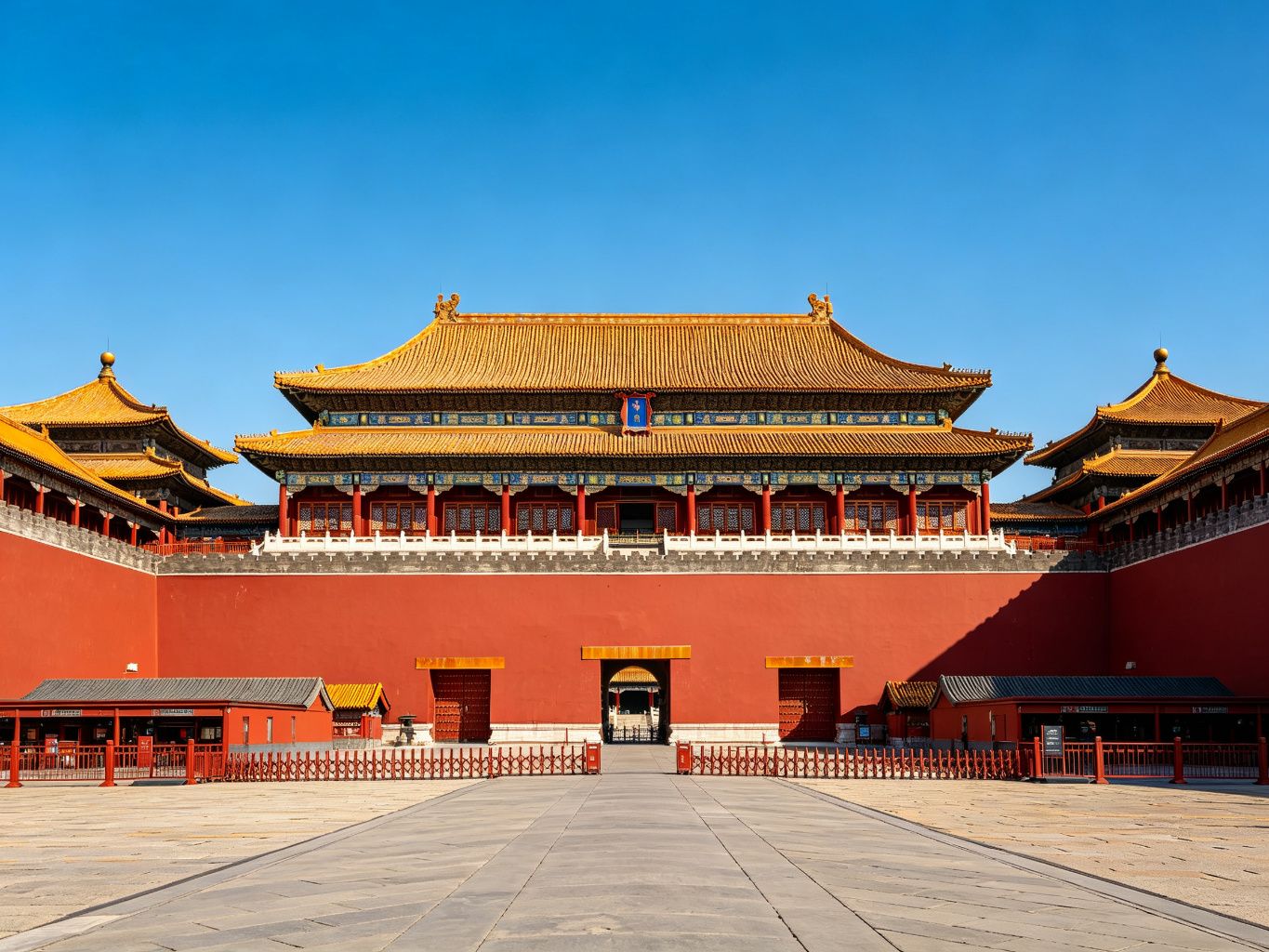
The Forbidden City: Imperial Power in Stone and Vermilion
For almost five hundred years, the Forbidden City was the exclusive domain of emperors and the stage for the Ming and Qing dynasties. Its name alone evokes secrecy and splendor, yet today its red walls and golden roofs welcome visitors from every corner of the globe as the Palace Museum. Walking through the Gate of Heavenly Peace and across the marble bridges, you follow a carefully choreographed axis designed to place the Son of Heaven at the center of the universe.
Beyond the throne halls, a maze of side palaces houses one of the world's finest collections of imperial porcelain, clocks, paintings, and jade. Plan to arrive early to avoid the crowds, and climb the artificial coal hill in nearby Jingshan Park at sunset for a panoramic view that reveals why this was once considered the center of the world.

The Great Wall: A Monument Woven into Mountains
No trip to Beijing is complete without standing on the Great Wall. While the structure stretches thousands of kilometers across northern China, the sections closest to the capital offer the most dramatic combination of restored watchtowers and rugged mountain scenery. Mutianyu, about ninety minutes north of downtown, balances accessibility with authenticity, its stone ramparts climbing chestnut-covered ridges in a series of breathtaking switchbacks.
You can hike the wall on foot, take a cable car to save energy, or slide partway down on a toboggan run. Whichever route you choose, pause at a watchtower and let the scale sink in: generations of laborers, soldiers, and farmers built this line of defense stone by stone, and it still cuts an unforgettable silhouette across the horizon.

Hutongs: The City's Living Memory
Beneath Beijing's wide modern avenues and neon-lit towers lies a labyrinth of narrow lanes known as hutongs. These grey-brick alleys, lined with courtyard houses called siheyuan, preserve the rhythm of old Beijing. On a quiet morning you can hear bicycle bells, smell sesame pancakes grilling on a street corner, and watch neighbors play chess beneath scholar trees that have shaded generations.
The areas around Shichahai, Nanluoguxiang, and Qianmen offer some of the best-preserved hutong scenes, though they range from touristy to quietly residential. The most rewarding way to explore is to rent a bicycle or join a pedicab tour, then stop for a bowl of mung-bean milk or a handmade dumpling lunch in a family-run courtyard café.

Peking Duck: A Meal Fit for an Emperor
Crisp lacquered skin, tender meat, paper-thin pancakes, sweet bean sauce, and fresh scallions: Peking duck is Beijing's most famous culinary ritual. The dish evolved in imperial kitchens and reached its modern form in the nineteenth century, when restaurants such as Quanjude and Bianyifang turned duck roasting into high theater. A skilled carver slices the bird tableside, separating golden skin from juicy meat while diners watch.
Each pancake is assembled like a small gift: a dab of sauce, a curl of scallion, a piece of crispy skin, and a strip of meat, folded into a bite-sized parcel. Pair the meal with a cucumber salad and plum wine, and you have an evening that tastes unmistakably like old Beijing.

Practical tip: Spring (April–May) and autumn (September–October) offer the clearest skies and most comfortable temperatures for walking the wall and exploring hutongs. Summer is hot and humid, while winter can be bitterly cold but rewards visitors with dusted-roof scenes and thinner crowds.